Lesson 2: Stoicism in Historical Context
Stoicism did not emerge in a vacuum. It was shaped by political instability, competing philosophical schools, and centuries of refinement. Understanding its historical evolution clarifies why Stoicism is both practical and enduring.
Learning Objectives
By the end of this lesson, students will:
- Understand the Hellenistic context in which Stoicism emerged.
- Identify major rival philosophical schools.
- Describe the contributions of early Greek Stoics.
- Explain how Stoicism evolved in Rome.
- Recognize why Stoicism continues to reappear in times of crisis.
I. The Hellenistic World: Philosophy After Empire
Stoicism emerged during the Hellenistic period — a time of profound instability following the death of Alexander the Great in 323 BCE.
The unified Greek world fractured into competing kingdoms. Political power shifted unpredictably. Citizens had far less influence over large-scale events.
Philosophy responded to this instability.
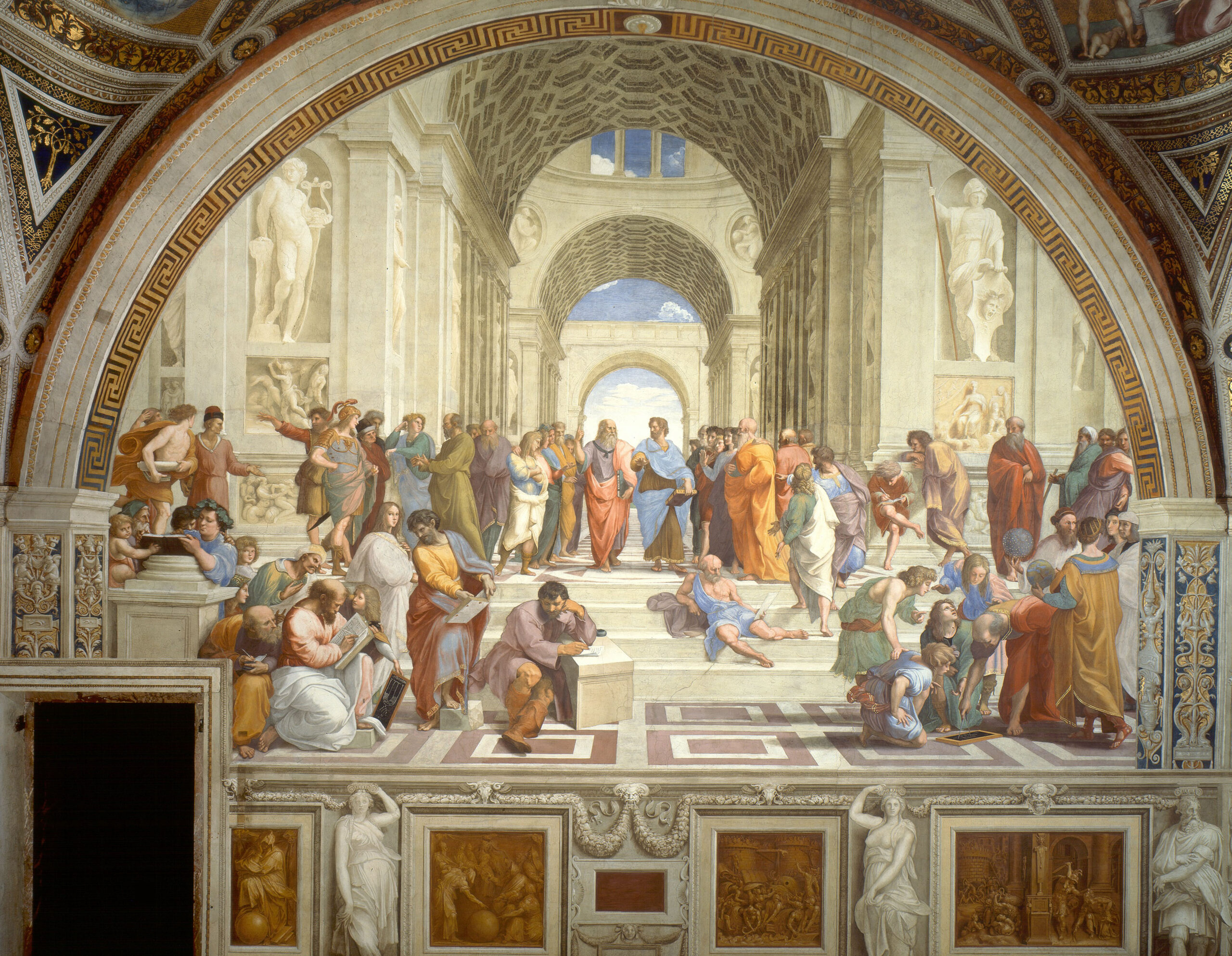
Earlier philosophers like Plato and Aristotle had focused heavily on metaphysics, politics, and ideal states.
But in the Hellenistic era, the central question changed:
How can an individual maintain stability in a chaotic world?
Philosophy became practical. It became therapeutic.
It asked:
- How should I respond to uncertainty?
- How can I remain steady amid change?
- What can truly not be taken from me?
Stoicism was one powerful answer.
II. Competing Philosophical Schools
Stoicism developed in dialogue—and disagreement—with rival schools. Understanding these competitors clarifies Stoic distinctiveness.
1. The Epicureans
Founded by Epicurus.
Core belief:
Pleasure (understood as absence of pain and disturbance) is the highest good.
Epicureans sought tranquility through:
- Simplicity
- Friendship
- Avoidance of political life
- Minimization of desire
Agreement with Stoics:
- Value of tranquility
- Simplicity over excess
Disagreement:
- Stoics: Virtue is the highest good.
- Epicureans: Pleasure is the highest good.
2. The Skeptics
Skeptics argued that certainty is impossible.
Solution:
Suspend judgment to achieve tranquility.
Stoics disagreed. They believed:
- Reason can grasp truth.
- Moral knowledge is attainable.
- Clear judgment is necessary for virtue.
3. The Cynics
Cynicism heavily influenced Stoicism.
The Cynics rejected:
- Wealth
- Social convention
- Political power
- Luxury
They believed virtue alone is sufficient.
Stoics adopted the Cynic emphasis on virtue but rejected their extreme rejection of society. Stoicism remained socially engaged.
III. The Early Greek Stoics
The founder, Zeno of Citium, established the foundation.
He was followed by:
Cleanthes
Cleanthes
Known for emphasizing divine rational order in the universe.
Chrysippus
Chrysippus
The great system-builder of Stoicism.
Chrysippus:
- Formalized Stoic logic.
- Developed Stoic physics.
- Systematized ethical doctrine.
It was said:
“If there had been no Chrysippus, there would have been no Stoa.”
The early Stoics built Stoicism as a complete philosophical system, divided into:
- Logic
- Physics
- Ethics
Ethics was the goal.
Logic and physics supported it.
IV. The Transition to Rome
Stoicism entered Rome in the 2nd century BCE and gradually evolved.
Roman culture valued:
- Duty
- Discipline
- Civic responsibility
- Practical wisdom
Stoicism adapted beautifully.
In Rome, the emphasis shifted:
Less technical logic.
More moral practice.
V. The Roman Stoics
Three figures dominate Roman Stoicism:
1. Seneca
Statesman, playwright, advisor to Emperor Nero.
Writings:
- Letters
- Essays on anger, grief, tranquility
Seneca focused on:
- Managing emotions
- Ethical leadership
- Wealth without attachment
He demonstrated Stoicism in political life—though not without controversy.
2. Epictetus
Born enslaved. Later freed.
He taught that:
- Freedom is internal.
- Control lies in judgment, not circumstance.
His teachings were recorded in the Discourses and Enchiridion.
His core insight:
It is not events that disturb us, but our judgments about them.
Epictetus distilled Stoicism into practical psychological training.
3. Marcus Aurelius
Roman Emperor.
Author of Meditations, written as private reflections.
He faced:
- War
- Plague
- Political betrayal
- Personal loss
Yet his writings emphasize:
- Humility
- Duty
- Rational reflection
- Acceptance of impermanence
Marcus shows Stoicism at the highest level of power.
VI. Evolution of Emphasis
Greek Stoicism:
- Systematic
- Technical
- Theoretical
Roman Stoicism:
- Practical
- Psychological
- Ethical
Core doctrine remained the same:
Virtue is sufficient for flourishing.
But Roman Stoicism emphasized daily exercises and moral discipline.
VII. Why Stoicism Endures
Stoicism resurfaces in times of instability.
It influenced:
- Early Christian thought
- Renaissance humanism
- Enlightenment ethics
- Modern cognitive behavioral therapy (CBT)
Why?
Because its central insight remains timeless:
We cannot control events.
We can control our judgments.
In times of war, plague, political upheaval, economic uncertainty—Stoicism offers stability without denial.
VIII. Discussion
- Why do you think practical philosophies arise during unstable times?
- Is Stoicism more suited to political engagement (like Marcus) or withdrawal (like Epicurus)?
- Does knowing Stoicism’s history strengthen or weaken its appeal?
IX. Reflection Exercise
Choose one of the following figures:
- Seneca
- Epictetus
- Marcus Aurelius
Write 1–2 pages:
- What challenges did they face?
- How did Stoicism shape their response?
- Which figure resonates most with you?
X. Lesson Summary
In this lesson, we learned:
- Stoicism emerged during political instability.
- It competed with Epicureanism, Skepticism, and Cynicism.
- Early Stoics built a comprehensive system.
- Roman Stoics emphasized daily moral practice.
- Stoicism remains relevant because human vulnerability remains constant.