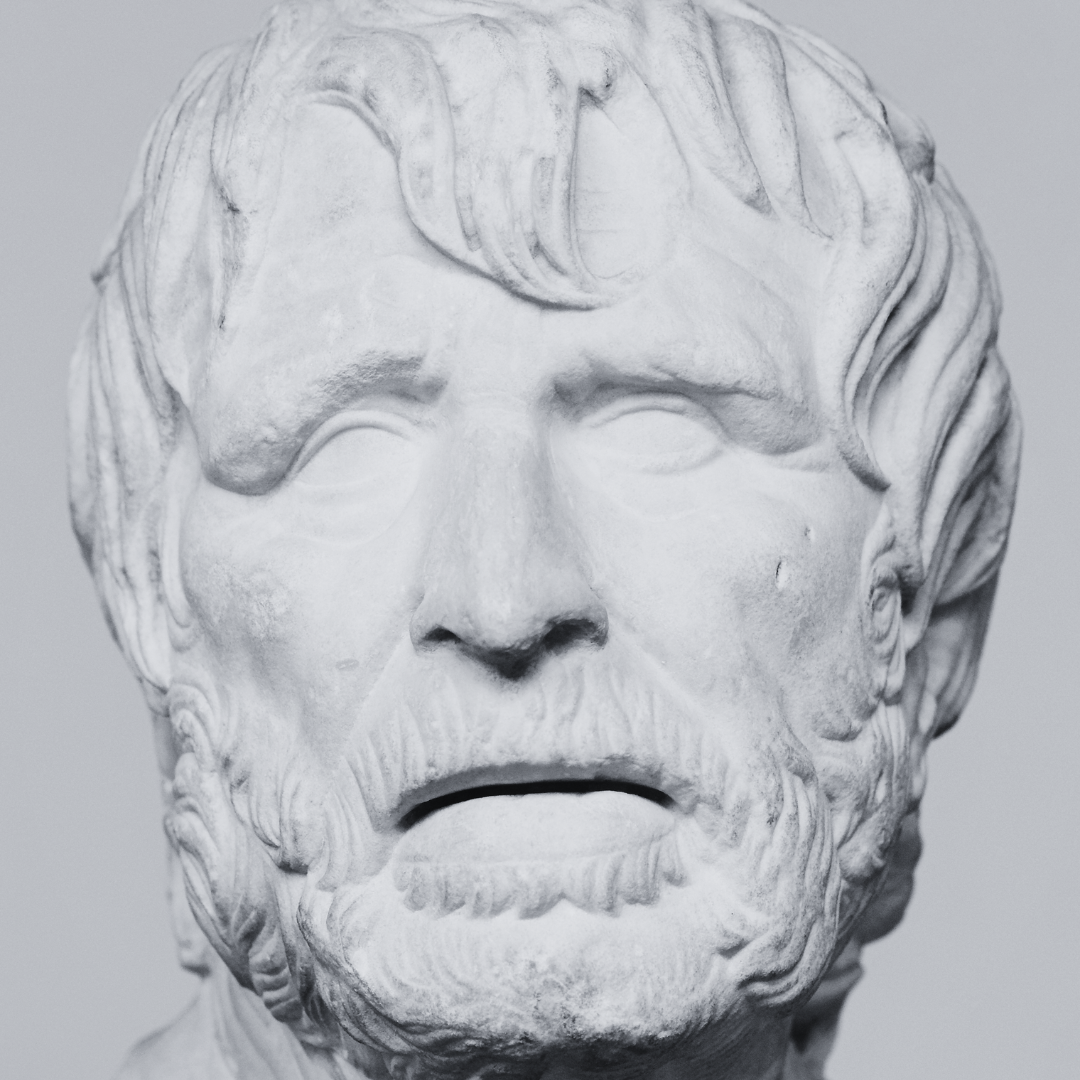
The Stoic Who Stood Too Close to Power
Lucius Annaeus Seneca was born around 4 BCE in Corduba, in Roman Spain, into a household already marked by intellect and ambition. His father, remembered as Seneca the Elder, was a wealthy and accomplished writer on rhetoric. From the beginning, the younger Seneca was expected not merely to think well — but to speak well, argue well, and rise high.
Philosophy, in that world, was not necessarily a calling. It was preparation.
And yet, something deeper took hold.
A Student Who “Laid Siege” to Wisdom
Seneca’s father selected the Stoic Attalus to tutor his son, largely for the man’s reputation for eloquence. But the young Seneca absorbed more than polished speech. He embraced the Stoic demand for moral transformation.
By his own account, he “laid siege” to the classroom — arriving first, leaving last, devouring instruction with restless hunger. From Attalus he learned a lesson that would echo throughout his life: philosophy must improve us daily. One should carry away from study “some one good thing” each day, returning home “a sounder man, or on the way to becoming sounder.”
This was not philosophy as ornament. It was philosophy as discipline.
And yet, while his teachers admired his zeal for self-improvement, they were well aware of the larger expectation. His father was not financing a contemplative retreat. He was preparing a statesman.
In Rome, a gifted young advocate could step into court by seventeen. Seneca was almost certainly among them — a rising legal talent with a formidable mind and voice.
Then his body failed him.
Illness and Isolation
In his early twenties, a severe lung condition nearly ended his career — and possibly his life. Forced to leave Rome, he traveled to Egypt to recover. What began as medical necessity became an extended retreat of nearly a decade.
In Egypt, Seneca read deeply, wrote extensively, and slowly rebuilt his strength. Removed from Rome’s competitive arena, he developed an interior life that would later give his writings their unusual intimacy. His Stoicism was no longer merely intellectual; it became existential.
When he returned to Rome at thirty-five, in 31 CE, he re-entered a capital trembling under suspicion and political volatility. The reigns of Tiberius and Caligula were marked by paranoia, denunciations, and swift reversals of fortune. Survival required caution. Seneca kept his head low, advancing carefully.
But Rome has a way of testing those who approach prominence.
The Fall to Corsica
In 41 CE, under Emperor Claudius, Seneca was accused — almost certainly for political reasons — of adultery with Julia Livilla and exiled to the island of Corsica.
The transformation was abrupt: from advocate in the capital to isolation on a remote island.
Exile stripped away pretense. It also sharpened his pen.
During these eight years, Seneca composed several important works, including On Anger and consolations addressed to both his mother and influential figures in Rome. Yet the irony was unmistakable: the man writing consolations increasingly required consolation himself.
It was during this period that letter-writing became central to his philosophical practice — a habit that would mature into the Letters to Lucilius, one of antiquity’s most personal philosophical collections. In those letters, Seneca does not posture as a perfected sage. He writes as a man in progress, wrestling openly with fear, ambition, aging, wealth, and time.
Exile deepened him. It did not embitter him.
Return to the Center
After eight years, fortune pivoted once more. Agrippina, wife of Claudius and mother of the young Nero, orchestrated Seneca’s recall. At fifty-three, he was summoned back to Rome to serve as tutor and adviser to the future Emperor Nero.
Few philosophical careers have swung so violently between obscurity and influence.
When Nero ascended the throne in 54 CE, Seneca stood at the center of imperial power. For a time, alongside Burrus, he helped guide the early administration, tempering impulses and drafting speeches that projected clemency and moderation.
It is tempting to ask whether Seneca believed he could shape Nero into a virtuous ruler. History would soon reveal Nero’s instability and cruelty. Whether the mission was naïve from the beginning is impossible to know.
But from a Stoic perspective, the calculation was simple: one does not choose the circumstances assigned; one chooses how to act within them.
Seneca believed politics was not optional for the capable. Unlike the Epicureans, who often sought tranquility away from civic life, Stoics held that public service — when possible — was a duty. If fate placed him in the imperial court, then virtue demanded engagement, not retreat.
Wealth, Power, and Tension
Seneca’s proximity to power brought wealth on a massive scale. He accumulated estates and substantial financial holdings. Critics in his own time accused him of hypocrisy: how could a philosopher of simplicity possess such riches?
Seneca did not pretend the tension did not exist. In his writings, he acknowledges repeatedly that he is striving, not perfected. He distinguishes between owning wealth and being owned by it, warning that slavery to luxury can bind more tightly than iron chains.
He knew the danger. He lived inside it.
The Final Lesson
As Nero’s reign darkened into paranoia and violence, Seneca gradually withdrew from political life. In 65 CE, accused of involvement in the Pisonian conspiracy — whether justly or not — he was ordered to take his own life.
He complied.
The accounts describe a deliberate and composed death. He opened his veins, consoled his friends, and discoursed on philosophy even as his strength faded. It was, in a grim way, the final enactment of his teaching: that death, too, is an event to be met with steadiness.
The Stoic in the World
If Epictetus represents Stoicism in chains, Seneca represents Stoicism in compromise. He did not live at the margins of society. He lived at its center — where ambition, influence, fear, and temptation converge.
His life was not simple. It was not morally immaculate. It was strained by contradiction.
And that is precisely why it remains compelling.
Seneca shows us what it means to pursue wisdom while entangled in responsibility. He demonstrates that philosophy is not reserved for cloisters or exile. It can — and perhaps must — be attempted amid noise, politics, and power.
He did not always succeed. He did not escape criticism. But he left behind a body of writing that continues to challenge us to ask:
Can we improve daily?
Can we serve without losing ourselves?
Can we face loss, disgrace, and death without surrendering our judgment?
Seneca’s answer was never triumphant.
It was disciplined, persistent, and human.