From Slavery To Freedom
Who Was Epictetus?
Among the great Stoic voices of antiquity — Seneca, the wealthy statesman; Marcus Aurelius, the philosopher-emperor — Epictetus occupies a singular place. The others wrote about power, responsibility, governance, and the moral hazards of privilege. Epictetus wrote from beneath them.
He did not contemplate slavery as a metaphor.
He was a slave.
A Name That Was Not a Name
His original name is unknown. Epiktētos in Greek means “acquired”. It was not given in affection, nor chosen in adulthood. It was a designation of ownership. A human being catalogued as property.
Born around 50 CE in the Roman province of Phrygia, he was brought to Rome and became the slave of Epaphroditus, a powerful freedman and secretary to Emperor Nero. That Epictetus later mentioned his master without bitterness is striking, for Epaphroditus had a reputation for cruelty even by Roman standards.
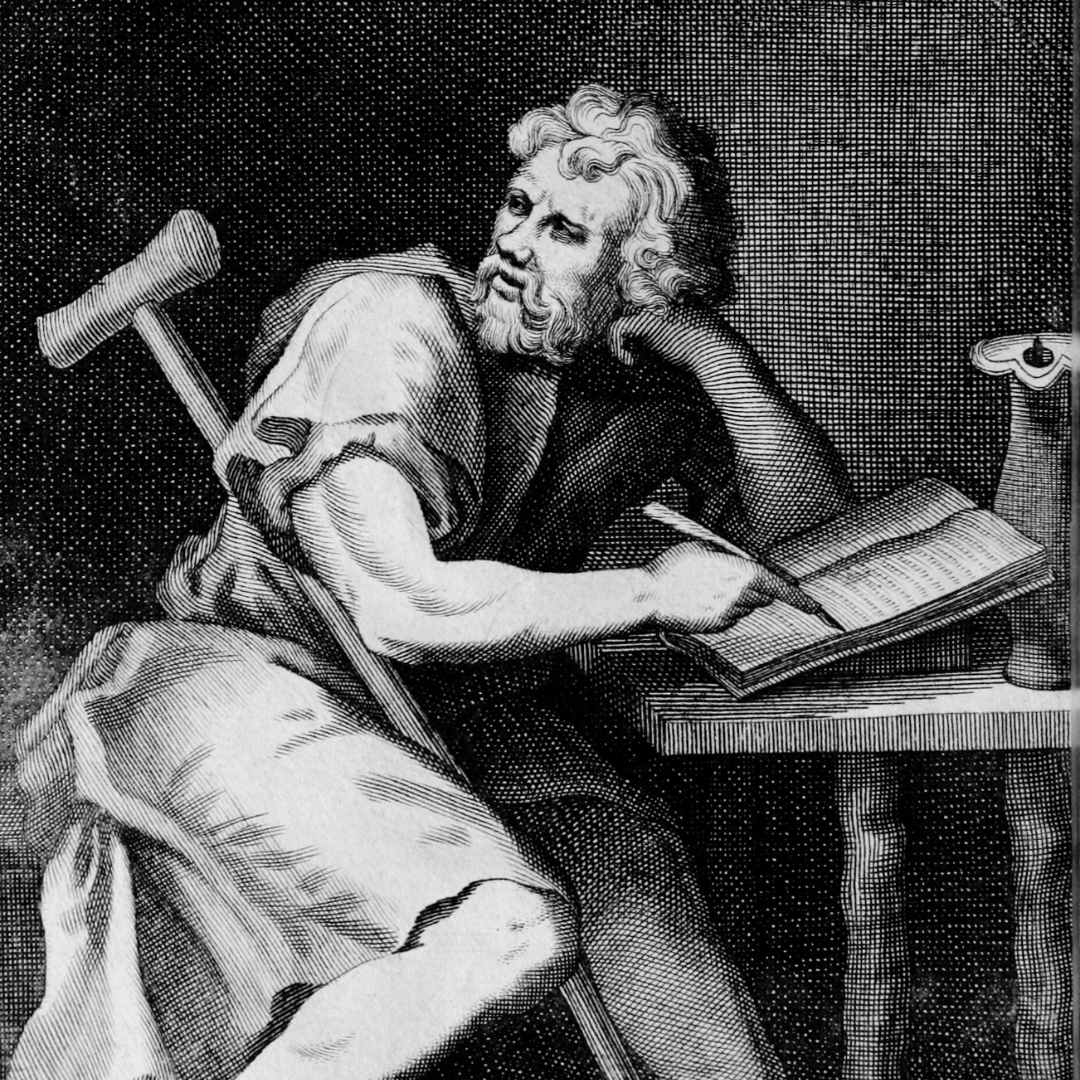
Later Christian writers recount an episode — half history, half moral legend. Epaphroditus, they say, once twisted the young slave’s leg with mounting force. Whether from anger, discipline, or perverse amusement, we do not know. Epictetus is said to have warned him calmly that the pressure was too great. When the bone finally broke, he uttered no cry, shed no tears, and remarked simply: “Didn’t I warn you?”
Whether embroidered or exact, the story endures because it reveals something essential. Epictetus would walk with a limp for the rest of his life.
But he would not consider himself injured in the only place that mattered.
“Lameness is an impediment to the leg, but not to the will.” – Epictetus
The Discovery of Inner Freedom
It was this distinction — the boundary between what can be harmed and what cannot — that became the cornerstone of his philosophy.
External conditions, he observed, are rarely ours to command. The body may be struck, confined, or broken. Reputation may be distorted. Property may be seized. Freedom may be delayed by law or whim.
Under legislation established by Augustus in 4 CE, slaves could not legally be freed before the age of thirty. Epictetus did not obtain his freedom until sometime after Nero’s death in 68 CE. Even liberty itself was subject to political currents.
Later, when the emperor Domitian banished philosophers from Rome in 89 CE, Epictetus — now a teacher of some repute — was again displaced, forced to leave the capital and resettle in Nicopolis in Greece.
Again, circumstances dictated. Again, he adjusted.
For Epictetus, this was not resignation. It was clarity.
There exists within the human being a faculty that remains sovereign: the will, the capacity for judgment and choice. Everything else may be assigned, altered, constrained, or destroyed. But the wil l — if disciplined — cannot be compelled.
Life as Assigned Role
Epictetus frequently compared existence to a theatrical performance. One does not choose the script, nor the length of the play, nor the costume in which one appears. One may be cast as a beggar, a cripple, a governor, or a private citizen. The assignment belongs to another—to fate, to providence, to the structure of reality itself.
But one thing remains within our charge: how well we perform the role.
“If it is the playwright’s pleasure that you should act a poor man, a cripple, a governor, or a private person,” he instructed, “see that you act it naturally. For this is your business—to act well the character assigned you; to choose it is another’s.” – Epictetus
Here speaks not the slave lamenting injustice, nor the freedman celebrating fortune, but the philosopher who has located dignity in performance rather than position.
Teacher in Exile
After obtaining his freedom, Epictetus devoted himself wholly to philosophy. He studied under Musonius Rufus and later taught in Rome for nearly twenty-five years. Unlike Seneca, he left no written works of his own. His thought survives through the careful notes of his student Arrian, preserved in the Discourses and the concise Enchiridion—a manual of Stoic practice.
When Domitian expelled philosophers from Rome, Epictetus established a school in Nicopolis. There he lived simply, almost austerely, owning little and shunning political ambition. His authority derived not from wealth or office but from discipline of mind.
Students traveled to hear him speak—not because he promised prosperity, but because he offered something more radical: invulnerability of character.
Unconquered
What distinguishes Epictetus among the Stoics is not merely the severity of his beginnings but the consistency of his conclusion. He did not rise from slavery to power. He rose from slavery to freedom of another order.
A body may be owned.
A leg may be broken.
A citizen may be exiled.
Yet the will remains, awaiting governance by its rightful master.
In an age that measures success by influence and possession, Epictetus stands as a counterexample. He possessed almost nothing. He governed no one. He commanded no army.
And yet he articulated one of the most enduring claims in Western philosophy: that freedom is not conferred by law, nor secured by status, but realized in the disciplined use of one’s own judgment.
He did not merely teach Stoicism.
He embodied it.